Listen to this article:
Would it come as a surprise to learn that “slop” was Merriam-Webster’s official 2025 Word of the Year? Me neither. Every day I see articles lamenting AI slop. I’d like to suggest a different perspective:
Not all slop is created equally.
I’m not a very good artist. No. That’s an overstatement. I’m a bad artist. Embarrassingly bad. Sometimes, like for this article, I want to use a picture to illustrate a point, but I can’t just draw one. Enter AI. I can describe what I want and in a few seconds I have a drawing to use as the featured image for this blog post. What do you think?
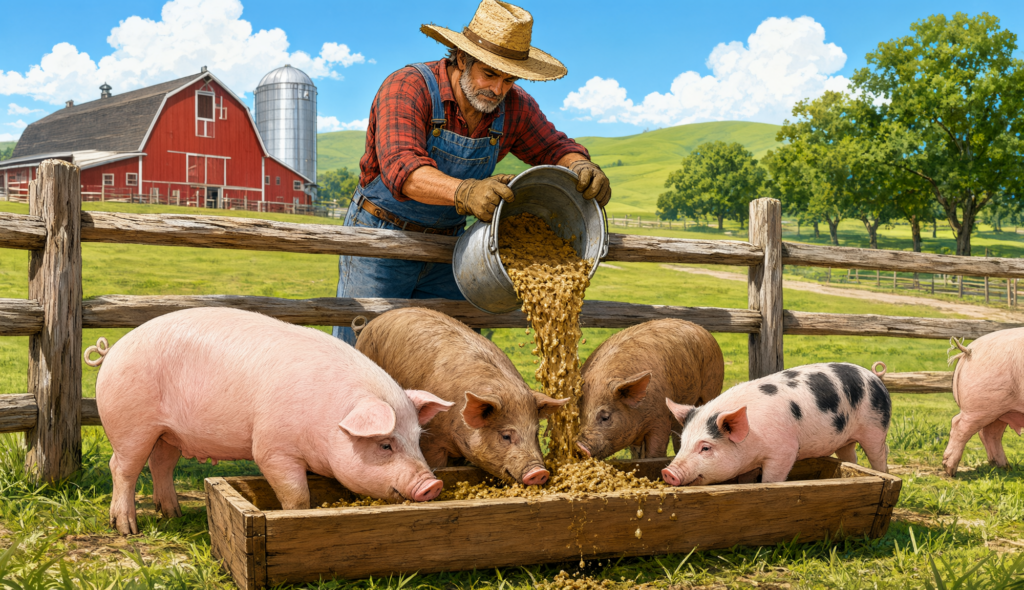
Looks good. Besides, even the worst AI illustration is better than anything I could draw myself.
Let’s do another one. This time, how about an infographic that illustrates ways that AI can be used to automate dermatological tasks:
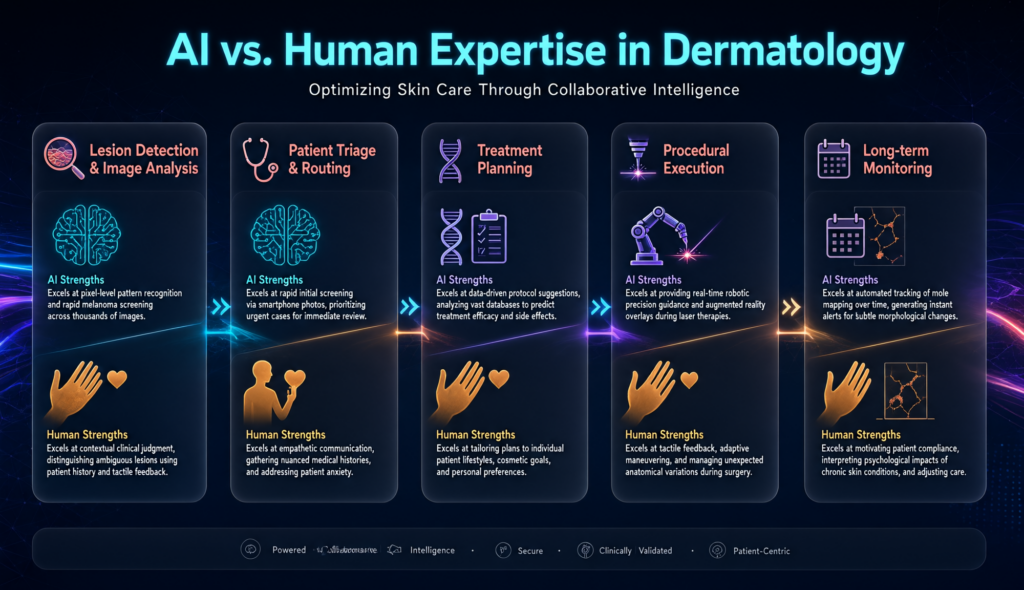
Impressive. I could include that in a conference presentation or social media post. Accuracy? It seems reasonable, I suppose. I don’t really know anything about dermatology and I didn’t have to in order to generate a plausible infographic. Should I publish this? No? Why not?
The first image asked AI to be creative. The second asked it to be correct. Not the same thing.
The problem isn’t AI. The problem is that AI lets people produce things that look authoritative without the requisite expertise.
Communication generally serves one of two broad purposes: to evoke and to inform.
Technology has democratized both forms of communication, but they must not be treated the same.
Evocative communication includes drawings, paintings, photographs, fiction, criticism, and opinion writing. Evocative communication has subjective right or wrong and subjective better or worse, but there often isn’t an objectively correct answer. If an art historian interprets a painting in one way and I interpret it in another, we’re both right from within our own frame of reference.
Democratization creates more artists and more art. Some of it’s good. Some of it’s bad. And every once in a while, some of it is brilliant.
Consider photography. It doesn’t cost anything to take or store a picture on your cellphone camera. How many poorly composed or lighted or blurry photos languish on our phones and computers? So much photographic slop.
Occasionally, though, one is great. The composition is right. The lighting is right. The subject is right. The stars aligned and we got a great picture. Maybe just a few dozen out of thousands. But with more pictures taken, among the slop there are bound to be more great photos.
Lowering the cost of creation increases both the amount of junk and the amount of brilliance.
Someone who knows what they’re doing can take better pictures more often. Professionals need to up their game because amateurs took a big leap forward.
Similarly for music composition, editing, broadcasting, and creating videos. I don’t have money for actors, crew, props, stage time, and everything else. But if I have an idea, I can describe it on a AI website and it will generate a motion picture for me. The quality can vary. I’m sure you’ve seen AI-generated videos. Sometimes characters will magically change locations cut-to-cut, and they will wear the same clothes throughout the entire show, regardless of whether they’ve walked through a rainstorm, fallen in the mud, or three days have passed. It’s annoying and it’s easy to be critical, but it doesn’t hurt anything.
If a film critic reviews a movie differently than I would, we might disagree. Are they right? Am I wrong? That’s the nature of art. Maybe I’m in the minority, but the difference of opinion doesn’t really hurt anyone. On the other hand, if a structural engineer calculates the load on a bridge incorrectly the bridge collapses. An infographic either accurately explains the subject or it spreads misinformation. Here slop becomes dangerous.
This is an example of the second type of communication which is intended to inform. In this case there is a right answer. Think engineering diagrams, project specifications, corporate policies, infographics, and data governance documentation.
The infographic generated above is probably a decent first draft, but it now needs someone who knows something about the topic to take it from here. Validate the content. Correct it. Extend it. Refine it.
Too many people use AI as a substitute for expertise, allowing them to speak with an authority they haven’t earned.
Experts use AI to extend their expertise. Non-experts use AI to replace expertise.
It’s easy. It takes less than a minute to create a believable example. So, before publishing AI-generated content, ask yourself:
Can I explain it?
Can I stand behind it?
Can I be accountable for it?
It’s really about standards of care. The closer your work gets to influencing what other people believe or do, the greater your responsibility to know what you’re talking about.
The real problem isn’t sloppy AI.
The real problem is unaccountable AI.
So go ahead and slop. Just slop responsibly.